SME carbon footprint
Your carbon footprint, calculated from the data you already have: accounting records, energy invoices, expense claims. Every figure is linked to its emission factor and its assumption, with a confidence index.
What makes up your footprint
The GHG Protocol distinguishes three scopes. We measure all three, to the same standard of evidence.
On-site combustion, company vehicles.
Purchased electricity, heating and cooling.
Suppliers, purchased goods and services.
Commuting, business trips, rented vehicles.
Freight transport, waste treatment.
How it works
You send us what you already have. We organise the rest.
Accounting records, energy invoices, expense claims, what you already have.
Every item is linked to its emission factor and its assumption.
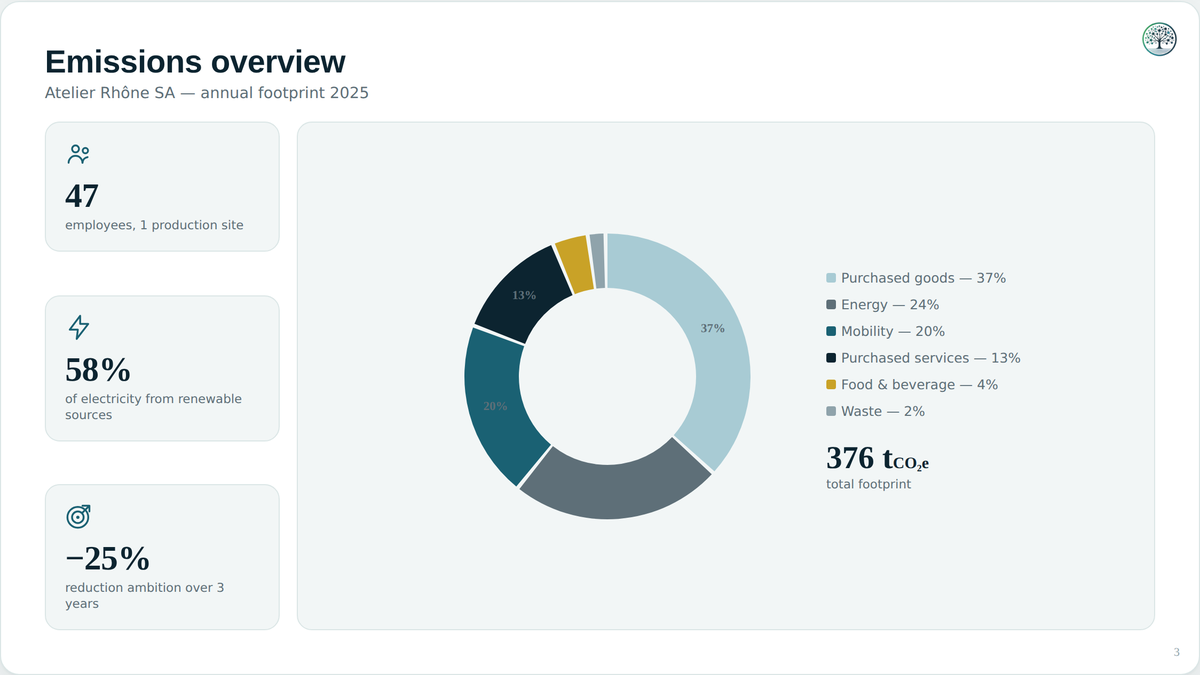
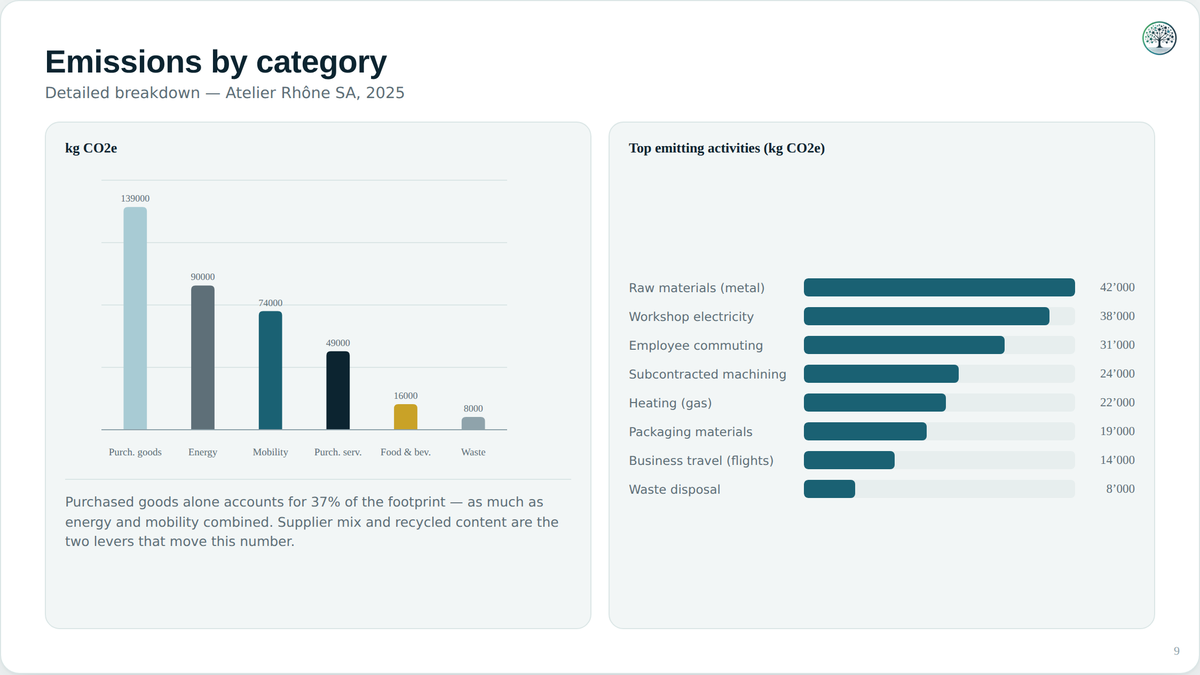
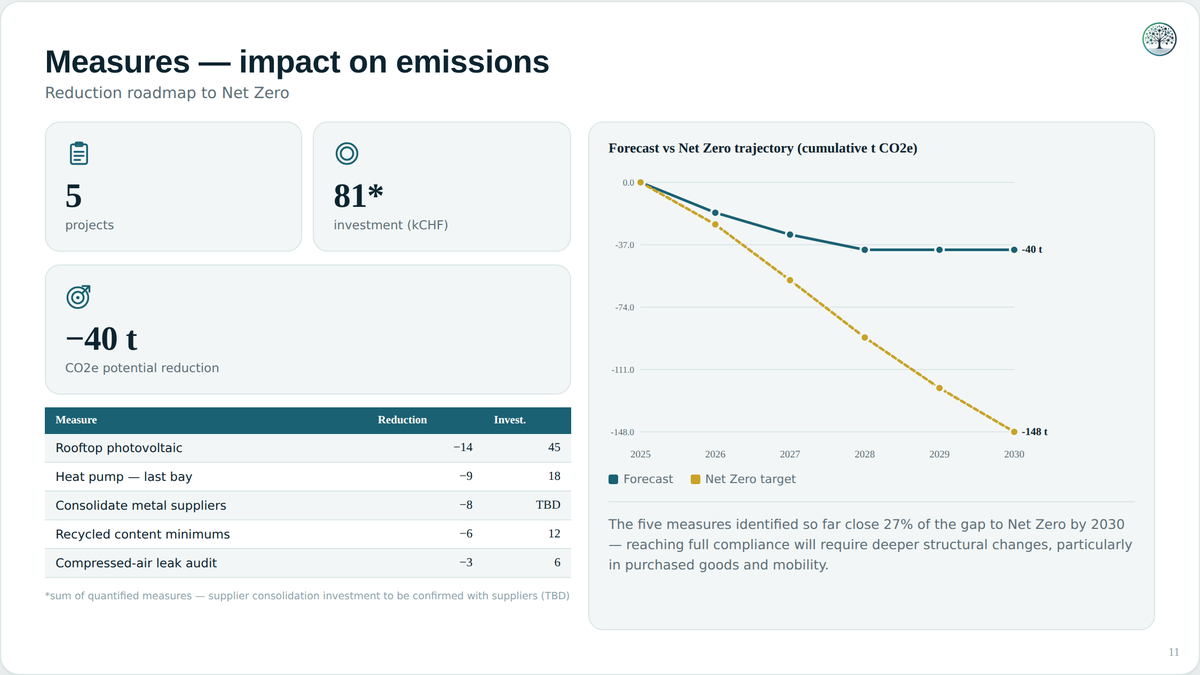
Total emissions, largest item, costed reduction levers.
Aperçu
Frequently asked questions
More and more SMEs are being asked by listed groups that must quantify their own indirect emissions, by their banks, or in tenders that now require a figure.
Only public-interest companies with at least 500 full-time employees, a balance sheet total above CHF 20 million or turnover above CHF 40 million are legally required to publish a climate report, under Art. 964a of the Swiss Code of Obligations. Around 200 Swiss companies are affected today. SMEs are not directly subject to it.
With what you already have: your accounting records and energy invoices. It isn't a new data collection, it's a different reading of existing data.
Let's talk
Three details are enough for a first conversation: your sector, your headcount, and whether you've measured anything before.
